Industrial-grade camera modules engineered for anti-spoofing facial recognition, access control, and edge-AI vision integration.
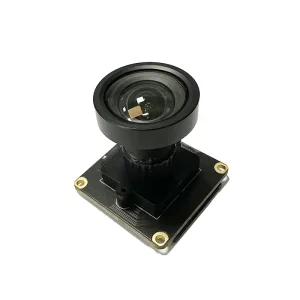
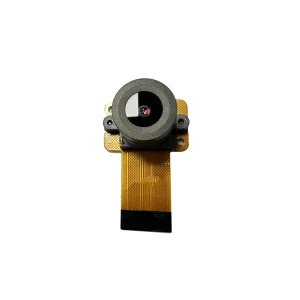
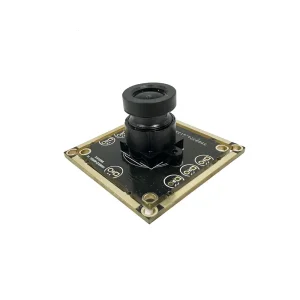
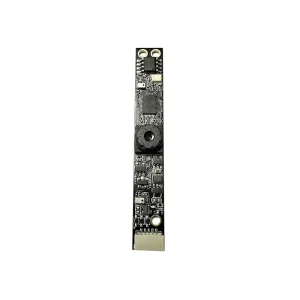
Analyzing the shift from standard 2D RGB verification to hardware-enforced Presentation Attack Detection (PAD).
Modern biometric verification infrastructures require strict adherence to Presentation Attack Detection (PAD) guidelines. Hardware-assisted liveness detection mitigates spoofing attacks originating from high-resolution paper prints, curved 3D silicone masks, and deepfake digital displays.
By capturing synchronized optical streams across Visible Light (RGB) and Near-Infrared (NIR 850nm/940nm) spectrums, advanced embedded camera modules analyze skin reflectance, micro-blood vessel absorption, and sub-dermal biological attributes in real-time.
Integrating compact camera sensors directly with low-latency Neural Processing Units (NPUs) allows liveness detection algorithms to execute in under 150 milliseconds at the edge, removing server bandwidth latency and securing localized biometric credentials.
Architectural innovations driving high-security authentication in financial, automotive, and smart access sectors.
Single-lens RGB solutions are increasingly vulnerable to high-luminance AMOLED screens showing video replay attacks. The global industry is mandating active IR LED array illumination combined with dual-sensor NIR stereo optics to verify spatial depth and skin absorption curves.
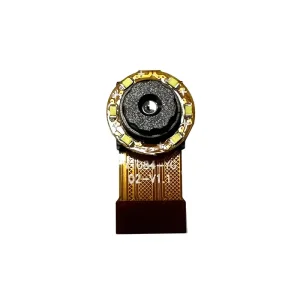
From ultrathin laptops to compact visual doorbells, space constraints demand ultra-small camera modules. Modern 9mm miniature optical modules deliver uncompromised 1080P resolution while fitting into bezel widths of under 3.5mm.
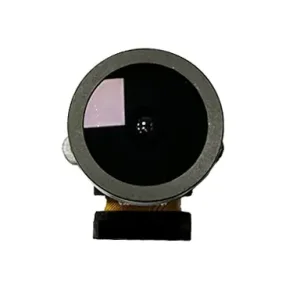
Optical aberration and fish-eye distortion distort facial feature vectors, leading to false rejection rates (FRR). Customized low-distortion (<1%) optical lenses ensure linear projection across the sensor plane for ultra-precise AI feature mapping.
Selecting the optimal camera architecture for enterprise anti-spoofing and liveness detection deployments.
| Architecture Type | Sensor Spectrum | Anti-Spoofing Capability | Ambient Light Sensitivity | BOM Cost Profile | Primary Industrial Use Case |
|---|---|---|---|---|---|
| Monocular RGB | Visible Light (400-700nm) | Basic (Level 1 PAD) | Sensitive to low light | Low Cost | Consumer Laptops & Standard Tablets |
| Dual RGB + NIR | Visible + Active NIR (850nm) | High (Level 2 PAD Compliance) | Excellent in complete darkness | Balanced / Mid-Range | Building Intercoms & Access Control Kiosks |
| 3D Active Stereo NIR | Dual NIR + IR VCSEL Pattern | Ultra-High (Level 3 Anti-Spoofing) | Immune to ambient sunlight flare | Enterprise Grade | Financial ATMs, Payment POS & High-Security Gates |
| 3D Time-of-Flight (ToF) | Infrared Modulation Wave | Ultra-High (Sub-millimeter depth) | High resilience indoors/outdoors | High-End Industrial | Industrial Robotics & Automotive Driver Monitoring (DMS) |
Deploying tailored camera module configurations to solve operational challenges across diverse environments.
Integration of dual 1080P high-definition RGB+NIR camera modules with narrow-band optical filters. Prevents fraud caused by printed 2D photos, video loops on smartphones, or high-fidelity silicone masks during self-service banking transactions.
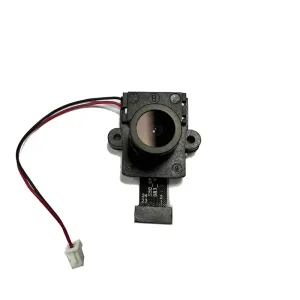
ODM Visual Doorbell modules engineered with wide-angle lenses (up to 140°) and integrated night vision. Maintains zero-distortion facial capture even under harsh sunlight backlight or pitch-black corridor conditions.
Automotive-grade 1080P camera modules equipped with 940nm invisible IR emitters. Continuous tracking of driver eye blink rates, head posture, micro-expressions, and liveness to prevent driver fatigue and unauthorized vehicle operation.
Anticipating next-generation advancements in sub-surface optical biometric verification.
Integration of single-die image sensors featuring interleaved RGB and NIR pixel arrays, eliminating alignment errors between separate physical lenses and reducing PCB footprint by 40%.
Embedding hardware Root-of-Trust (RoT) and AES-256 cryptographic signature hardware directly into the camera module ISP to eliminate physical MIPI bus interception attacks.
Transitioning from basic dual-wavelength NIR to multi-channel optical micro-spectrometers, verifying cellular subcutaneous pulse waves (rPPG) directly inside micro camera modules.
From optical design and SMT mounting to high-precision active alignment and automated thermal burn-in testing.
We configure lens elements, field-of-view angles (ranging from 60° narrow focal lenses up to 140° ultra-wide optics), IR-cut filters, and bandpass optical coatings matching exact LED wavelengths.
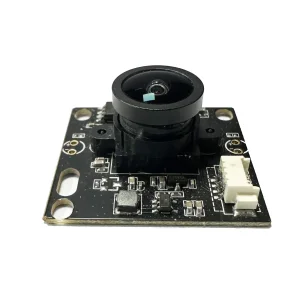
Supporting diverse system-on-chip platforms via MIPI CSI-2, USB 2.0/3.0 UVC driver-free protocol, DVP parallel, and Wi-Fi IP connectivity. Custom FPC length and PCB form factor shaping available.
Every camera batch undergoes 100% automated optical modulation transfer function (MTF) testing, thermal shock stress testing (-30°C to +70°C), and continuous long-term image consistency validation.
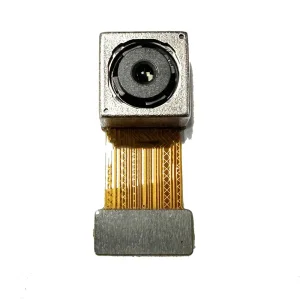
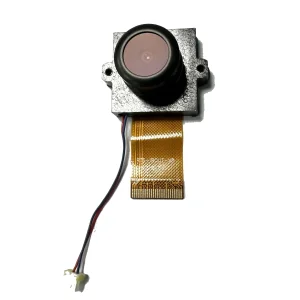
Select a module to review detailed technical specifications and initiate OEM sample requests.
In-depth technical answers regarding liveness detection integration, optical filter selection, and custom manufacturing.
Detection De La Vivacité (Liveness Detection) refers to technical biometrics algorithms and hardware architectures designed to distinguish a live human subject from an inanimate spoofing artifact (such as a printed photograph, screen playback, or 3D mask). Hardware-based liveness detection utilizes synchronized RGB and Near-Infrared (NIR) sensors to verify biological properties like skin reflectivity and facial depth in compliance with ISO/IEC 30107-3 PAD standards.
Standard visible RGB light sensors can be tricked by high-resolution screens or realistic prints. NIR wavelengths (specifically 850nm and 940nm) interact differently with human tissue compared to synthetic materials like paper, plastic, or liquid crystal displays. Human skin absorbs and reflects NIR wavelengths according to sub-dermal physiological characteristics, making active NIR illumination essential for robust Level 2 and Level 3 Presentation Attack Detection (PAD).
Our custom camera modules support a wide range of industry-standard interfaces including MIPI CSI-2 for high-speed direct SoC integration (e.g., Raspberry Pi, Rockchip, Qualcomm, Nvidia Jetson), USB 2.0/3.0 UVC driver-free protocol for Windows, Linux, Android, and macOS systems, DVP parallel for low-cost microcontrollers, and wireless Wi-Fi/Ethernet streaming for smart home and access control devices.
Yes. We provide complete ODM lens and filter matching services. Depending on your operational environment, we can coat or integrate narrow bandpass filters (e.g., 850nm BPF or 940nm BPF with ±10nm FWHM) onto the optical lens barrel to block ambient sunlight interference while allowing active infrared illumination to reach the CMOS sensor with maximum efficiency.
Our manufacturing facility in Shenzhen follows ISO9001 quality management procedures. Every camera module undergoes 100% automated optical alignment, Modular Transfer Function (MTF) resolution verification, and high-temperature thermal aging burn-in cycles. This process guarantees consistent color fidelity, focus precision, and operational stability over extended multi-year deployments.