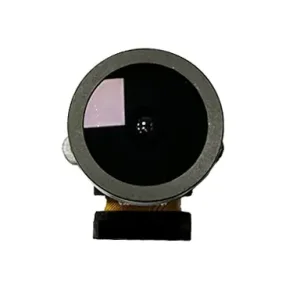
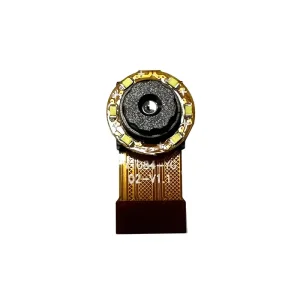
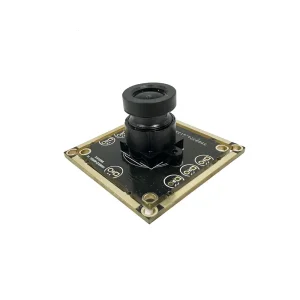
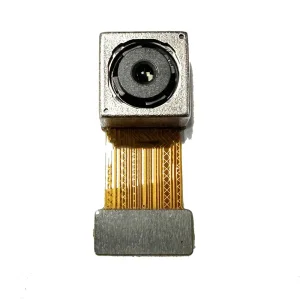
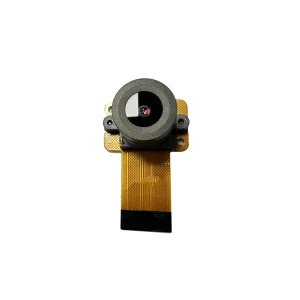
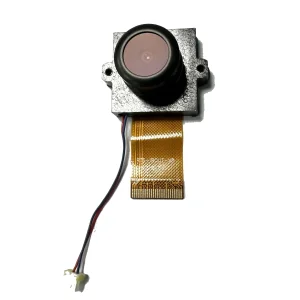
Selected high-definition camera modules and optical inspection systems engineered for OEM enterprise sourcing, automated contact lens manufacturing lines, and vision systems.
Analysis of the global contact lens distribution landscape, silicone hydrogel chemistry innovations, and automated optical quality assurance systems.
The global contact lens market is undergoing a structural paradigm shift toward ultra-breathable Silicone Hydrogel (SiHy) materials. Air Optix HydraGlyde leads this category by solving two core failure modes of early soft lenses: ocular surface desiccation and lipid/protein bio-fouling. Global bulk distributors are increasingly prioritizing vendors capable of delivering lot-to-lot consistency backed by validated micro-optical inspection protocols.
The proprietary HydraGlyde Moisture Matrix technology works by embedding a specialized block copolymer (EOBO - Polyoxyethylene-polyoxybutylene) into the lens substrate. This creates a hydrophilic envelope around the lens that retains moisture for over 16 continuous hours, significantly outperforming legacy HEMA-based soft lenses in tear-film stability trials.
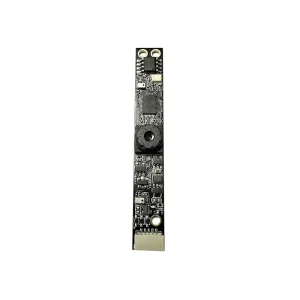
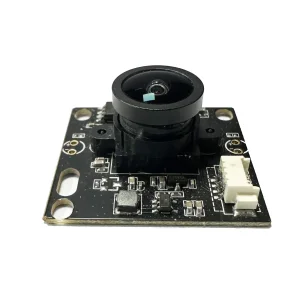
Modern high-speed automated contact lens production requires real-time sub-micron defect detection. Manufacturers utilize high-resolution industrial vision modules—such as distortion-free USB camera modules and high-frame-rate CMOS sensors—to perform edge-tear verification, micro-bubble detection, and surface smoothness audits before sterile blister packaging.
Engineering comparison of Lotrafilcon B silicone hydrogel properties, SmartShield technology performance, and automated quality control standards.
| Optical & Polymer Parameter | Air Optix HydraGlyde Specification | Legacy HEMA Soft Lenses | Quality Assurance Testing Protocol |
|---|---|---|---|
| Base Polymer Material | Lotrafilcon B (Silicone Hydrogel) | Polymacon / HEMA Polymer | FTIR Spectroscopy & Polymer Purity Test |
| Oxygen Transmissibility (Dk/t) | 138 @ -3.00D (Hyper-Transmissible) | 15 - 25 Dk/t (Low Oxygen Transmissibility) | Polarographic Oxygen Flux Measurement |
| Water Content (%) | 33% (Low Water, High Oxygen) | 55% - 69% (High Water, Dehydration Risk) | Gravimetric Refractometric Moisture Balance |
| Surface Protection Technology | SmartShield ultra-thin plasma layer | Uncoated / Non-plasma surface | Contact Angle Goniometry & AFM Surface Mapping |
| Wetting Agent Architecture | HydraGlyde Moisture Matrix (EOBO Copolymer) | Internal PVA / External Saline Soak | Tear Film Break-up Time (TBUT) Simulation |
| Production Quality Control System | 100% Automated Optical Inspection (AOI) via CMOS Cameras | Manual Sampling & Low-Res Microscope | Sub-pixel Edge Defect & Particle Analysis (YXD Vision Modules) |
SmartShield technology creates an ultra-thin protective shield around the outer surface of the lens. This permanently bonded plasma layer resists deposits—such as lipids and cosmetic residue—keeping the lens clean and smooth throughout its 30-day monthly wearing cycle.
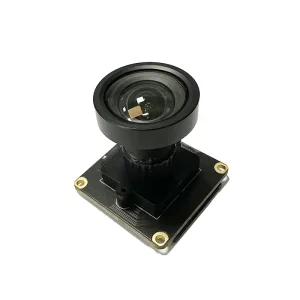
Precision lathe-cut optical zones ensure exact spherical and toric corrections across broad diopter ranges (+6.00D to -12.00D). Lens curvature profile uniformity is verified using ultra-low distortion optical lenses during high-speed blister packing inspection.
Standard operating procedure for institutional optical buyers, hospital networks, retail optical chains, and B2B eCommerce suppliers.
Global procurement directors must audit suppliers for direct authorization, lot number traceability, and verified batch certificates of analysis (CoA). Avoid gray-market channels by ensuring tamper-evident packaging and secondary barcode serialization.
Contact lens blister packages contain buffered saline solutions that require strict environmental controls. Warehousing facilities must maintain temperatures between 15°C to 25°C, away from direct thermal radiation, with automated ambient logging systems.
Multi-country logistics require multi-lingual labeling (GS1-128 DataMatrix barcodes, UDI - Unique Device Identification) compliant with regional medical device registries, including FDA 21 CFR Part 820 and EU MDR 2017/745.
How high-definition camera modules and machine vision equipment optimize automated contact lens quality assurance lines.
In high-speed mold production lines, contact lenses pass through inspection cells at speeds exceeding 60 units per minute. Utilizing industrial 4 Million HD camera modules allows automated systems to spot micro-flaws, edge burrs, and particulate contamination instantly.
Curved optical surfaces require specialized vision lenses. Utilizing specialized distortion-free USB camera modules prevents optical aberration caused by spherical lens curvature during automated visual alignment and power measurement.
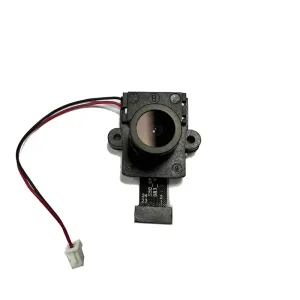
During automated picking, hydrated lens transfers, and blister sealing, high-frame-rate wide-angle camera modules ensure continuous alignment control, reducing mechanical jams and sterile seal failures.
Navigating international regulatory frameworks for medical device distribution and optical vision equipment.
Soft contact lenses are regulated as Class II medical devices in the US. Suppliers must provide valid 510(k) numbers, factory registration, and UDI barcode integration on all secondary cartons.
Under EU MDR 2017/745, silicone hydrogel contact lenses require CE certification under Class IIa, backed by strict EUDAMED registration and clinical evaluation documentation.
Distribution in China, Japan, and South Korea requires local in-country representation, bio-compatibility testing re-validation, and localized packaging instructions in native scripts.
Manufacturing and packaging plants must maintain ISO Class 7 Cleanrooms, ISO 13485 certified quality management systems, and 100% automated optical inspection validation.
Next-generation innovations bridging ocular medical science with advanced optoelectronic micro-sensing.
The integration of micro-sensors into silicone hydrogel lenses will enable continuous intraocular pressure (IOP) monitoring for glaucoma patients, tear-glucose sensing for diabetic health tracking, and electro-chromic tinting responsive to ambient UV intensity.
Generative AI and deep-learning visual inspection models will replace conventional threshold-based vision algorithms. High-speed miniature camera modules installed directly inside sterile robotics arms will evaluate 3D surface topographies in real time.
Future iterations of HydraGlyde moisture matrices will incorporate molecularly imprinted polymeric networks capable of releasing anti-allergy medication or dry-eye therapeutic agents over 30 days of wear.
Detailed answers covering product specifications, supply chain logistics, compliance, and optical inspection integration.
Air Optix HydraGlyde combines two advanced technologies: SmartShield Technology, which forms an ultra-thin protective barrier against lipid deposits, and the HydraGlyde Moisture Matrix, which surrounds the lens in long-lasting moisture. This dual-action mechanism delivers an exceptionally high oxygen transmissibility (138 Dk/t) while maintaining tear film stability throughout the 30-day wear period.
High-precision industrial camera modules (such as MIPI CSI-2, USB 2.0 UVC, and distortion-free lens modules) are integrated into high-speed manufacturing, sorting, and packaging lines. They perform Automated Optical Inspection (AOI) to detect sub-millimeter tearing, micro-scratches, edge deformities, and blister seal flaws before products reach global distributors.
B2B procurement teams must require Certificate of Analysis (CoA) for every lot, FDA 510(k) or CE MDR compliance verification, ISO 13485 cleanroom manufacturing certificates, GS1-128 barcode serialization data, and verified temperature log records during international shipping.
Yes. OEM/ODM camera module manufacturers (such as Shenzhen You Xiang Da Technology Co., Ltd. - YXD) customize field of view (FOV), optical distortion levels, fixed or autofocus lenses, IR filters, PCB form factors, and host interface protocols (USB, MIPI, DVP) to match custom optical inspection machinery.
Air Optix HydraGlyde contact lenses packaged in sterile blister packs typically carry a shelf life of 3 to 5 years from the date of manufacture. Storage conditions require a controlled room temperature between 15°C and 25°C (59°F to 77°F), shielded from direct sunlight and extreme thermal freezing.
Explore our comprehensive lineup of precision optical vision modules, camera sub-assemblies, and industrial supply hardware.