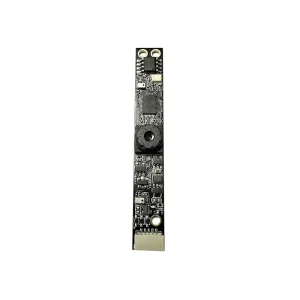
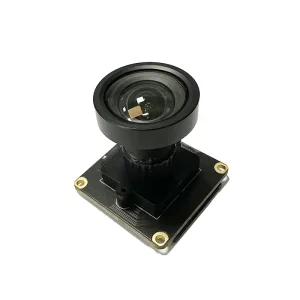
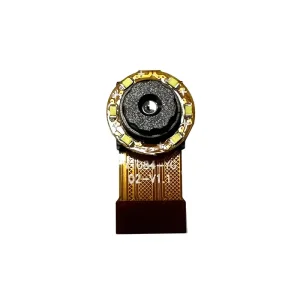
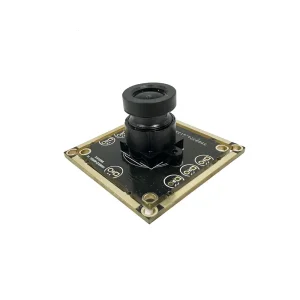
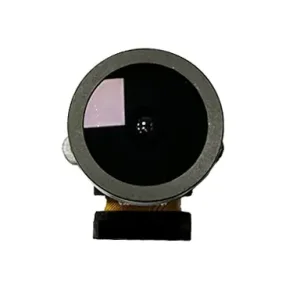
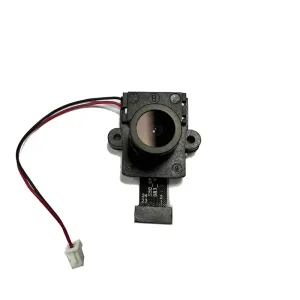
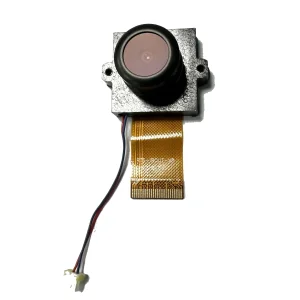
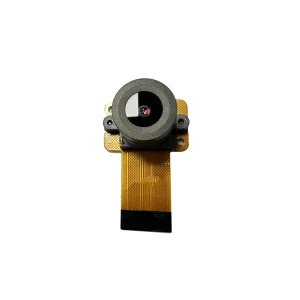
Engineered for low-latency transmission, high optical clarity, and robust deployment across smart building, automotive, and industrial video infrastructure.
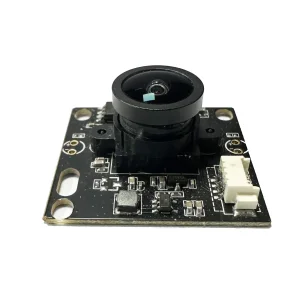
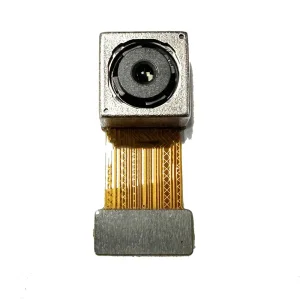
Navigating the architectural transformation of enterprise video surveillance, optical module assembly, and contract manufacturing standards in the European and global B2B markets.
The global security and smart monitoring landscape is undergoing a systemic transition. Modern enterprise buyers, system integrators, and engineering teams no longer evaluate an Überwachungskamerasystem (Surveillance Camera System) strictly on raw resolution or commodity price points. Instead, purchasing decisions are dictated by holistic computational imaging capabilities, long-term optical fidelity, supply chain resilience, and hardware-level cybersecurity compliance.
As enterprise networks expand across municipal infrastructure, automated logistics centers, high-density residential developments, and critical industrial utilities, the underlying camera hardware must process complex visual scenes directly at the network edge. Selecting the optimal manufacturing partner and OEM/ODM engineering service provider is the single most critical factor in guaranteeing sensor longevity, zero-drift optical alignment, low Bitrate bandwidth efficiency, and multi-year operational reliability.
This technical whitepaper provides B2B procurement heads, systems designers, and CTOs with an authoritative roadmap for sourcing, configuring, and manufacturing high-performance camera modules and integrated Überwachungskamerasystem hardware directly from premier Chinese Factory 4.0 facilities.
Key technological inflections shaping the next 5 to 10 years of professional video surveillance systems.
Traditional video recording systems relied heavily on centralized VMS servers or cloud infrastructure for metadata processing. The modern architecture embeds dedicated NPUs (1.5 to 10 TOPS) directly onto the camera sensor board. This allows real-time execution of vision transformers, object detection models (YOLOv8/v10), structural human-vehicle classification, and anomaly detection at sub-10ms latencies while dramatically conserving downstream bandwidth.
Sensors are moving beyond standard RGB filters. Industry-grade surveillance demands Sony STARVIS 2 and Back-Illuminated (BSI) CMOS sensors paired with dual-band IR/Visible optical filters. Advanced OEM camera designs incorporate multi-lens arrays that fuse thermal microbolometer streams with ultra-low-light visible spectrum video, delivering high-contrast, full-color identification even under 0.0001 Lux environmental illumination.
While H.265/HEVC remains the default enterprise standard, next-gen hardware platforms are integrating native AV1 hardware encoders alongside proprietary Smart Codec algorithms. By leveraging Region of Interest (ROI) dynamic encoding, surveillance systems maintain ultra-high sharpness on moving targets while compressing static background areas, yielding up to 70% bit-rate reductions compared to legacy baseline codecs.
| Architecture Feature | Legacy Überwachungskamerasystem | Modern Factory 4.0 Standard | Next-Gen Engineering (2025-2030) |
|---|---|---|---|
| Video Processing | Centralized NVR / Host PC | Edge ISP + Smart Codec H.265+ | On-Chip NPU (10+ TOPS) + Spatial AI |
| Lens Alignment | Manual Screw Lock (High Drift) | Semi-Automated Active Alignment | Sub-Micron Automated 6-DOF Active Alignment |
| Dynamic Range | 60 dB - 80 dB Standard WDR | 120 dB True WDR (Multi-Exposure) | 140 dB + Real-Time HDR Overlapped Digital WDR |
| Interface Bus | DVP / Analog Output | MIPI CSI-2 (4-Lane) / USB 2.0 UVC | MIPI CSI-3 / High-Speed PCIe & GMSL2/FPD-Link III |
Tailored optical hardware configurations designed for specialized environmental, operational, and regulatory deployment mandates.
Demands high-speed global shutter image sensors capable of freezing motion at speeds up to 250 km/h without rolling shutter distortion. Integrated IR flash triggers and narrow-bandpass optical filters isolate vehicle license plates across multi-lane highways under intense headlight glare or total darkness.
Requires dual thermal-optical payload camera assemblies engineered with rugged IP68 weatherproofing, nitrogen-purged enclosures, and corrosion-resistant housing. Designed to continuously monitor transformer temperature thresholds and perimeter boundary lines under severe climatic conditions (-40°C to +85°C).
Requires compact, low-distortion ultra-wide-angle camera modules (120° to 180° FOV) with high dynamic range (HDR) to handle severe backlighting behind visitors. OEM modules feature integrated IR illumination LEDs, MIPI or USB interfaces, and anti-spoofing 3D depth sensors for secure facial verification.
Automotive-grade camera modules certified to ISO/TS 16949 standards. Utilizing automotive starlight sensors, wide-dynamic range ISPs, and robust coaxial transmission interfaces (GMSL/FPD-Link) for Driver Monitoring Systems (DMS), Advanced Driver Assistance Systems (ADAS), and commercial dash recorders.
High frame rate (up to 120fps @ 1080P) distortion-free camera modules engineered for pick-and-place robots, automated guided vehicles (AGVs), and inline quality check systems. Low-latency USB 3.0 or MIPI interfaces allow instant edge processing for defect detection.
Compact form factor autofocused camera modules designed for seamless integration into interactive self-checkout screens, document scanners, and heat-map customer counting systems. Engineered for true color accuracy and long-term operating durability.
How Shenzhen’s advanced optical manufacturing ecosystem yields superior price-to-performance, strict quality control, and rapid volume scalability for global buyers.
Shenzhen, China stands as the world's undisputed center for optical design, CMOS sensor packaging, and precision camera module manufacturing. Partnering with a leading China-based factory provides international enterprises with unparalleled manufacturing advantages:
Traditional manual lens screwing introduces tilt, uneven focal sharpness, and image corner blurring. Our Class 10,000 cleanroom production facilities utilize 6-axis robotic Active Alignment machines. Sensor boards are illuminated during assembly, and lenses are positioned sub-micron in real-time to optimize Modulation Transfer Function (MTF) resolution across the entire image plane.
By housing optical lens design, SMT surface-mount technology, COB (Chip-on-Board) packaging, custom FPC flex cable fabrication, and final testing under one corporate roof, engineering cycles are reduced by over 60%. This tight integration shields enterprise clients from global component bottlenecks and fluctuating market pricing.
Every industrial camera module batch undergoes intensive environmental stress screening. This includes 100% full-load thermal aging tests (72+ hours at 65°C), drop and vibration resistance testing, ESD protection checks, and humidity exposure cycles (-40°C storage to +85°C operational validation).
Meeting strict regulatory standards across European (DACH/EU) and North American commercial sectors.
Hardware-level design support for privacy masking, secure boot firmware validation, dynamic AES-256 data encryption, and compliance with the EU's NIS2 Cybersecurity Directive.
Flexible component selection pipelines allowing buyers to spec NDAA-compliant SoC processors and non-restricted CMOS image sensors for government and enterprise installations.
Full manufacturing compliance certified under ISO 9001:2015 quality management systems and ISO 14001 environmental protocols. Products carry CE, FCC, RoHS, and REACH verification.
Multi-lingual technical support, localized FAE (Field Application Engineer) guidance, fast-track custom prototyping (7-14 days), and transparent RMA warranty replacement framework.
A structured 5-stage OEM/ODM workflow engineered to minimize development risk and guarantee supply continuity for long product lifecycles.
Initial technical consultation defining image sensor selection, lens field of view (FOV), target ISP parameters, interface type (MIPI, USB, DVP, IP), dimensional constraints, and thermal dissipation thresholds.
Custom optical lens barrel simulation, optical distortion correction (ODC), multi-layer PCB layout design, and FPC flex cable engineering optimized for impedance control and low EMI emission.
Sample assembly utilizing automated 6-axis Active Alignment (AA) technology. Initial sample batches delivered in 10-14 business days complete with MTF optical test reports and ISP tuning files.
Testing in dedicated environmental chambers. Evaluation of color reproduction, SNR performance under low light, dynamic range verification, vibration testing, and high/low temperature operating limits.
Scale manufacturing in ISO 9001 certified cleanrooms. Full traceability with individual unit serial numbers, automated barcode scanning, batch-level reliability documentation, and SLA-guaranteed shipping windows.
Clear, engineer-backed answers to essential technical and commercial procurement inquiries.
Explore our full portfolio of high-definition, wide-angle, distortion-free, and driving recorder camera modules.