China Top 10 Low Distortion Lens Module Suppliers?

Time:2026-10-26 Author:Henry
0%

Choosing the right supplier requires more than comparing megapixels, prices, or catalog images. This guide examines China’s top 10 low-distortion lens module suppliers through practical engineering criteria. These include distortion control, modulation transfer function, working distance, coating quality, alignment accuracy, and production consistency.

A Distortion-Free Low-Distortion Lens Module should preserve straight edges across the image. In real applications, a door frame must remain straight, even near the corners. Optical designer Dr. José Sasián describes this design mindset clearly: “A good optical system is one that meets its requirements, not one that merely looks perfect on paper.” His point matters because low distortion alone cannot guarantee useful imaging. Focus stability, sensor matching, thermal behavior, and assembly tolerance also shape final performance.

The suppliers reviewed here serve security cameras, machine vision, robotics, medical equipment, and automotive imaging. Some specialize in compact M12 modules. Others support customized glass designs, infrared wavelengths, or high-volume manufacturing. Factory audits, sample testing, and production records remain essential evidence. Marketing claims can sound convincing. They can also hide weak edge resolution or inconsistent calibration.

This comparison is not a perfect ranking. Supplier capabilities change, and public technical data may remain incomplete. Buyers should request distortion maps, MTF charts, tolerance reports, and tested samples before committing. A cheaper lens may increase software correction work. A premium module may still fail if its sensor interface is poorly matched. The strongest supplier is the one that proves performance under the customer’s actual conditions.
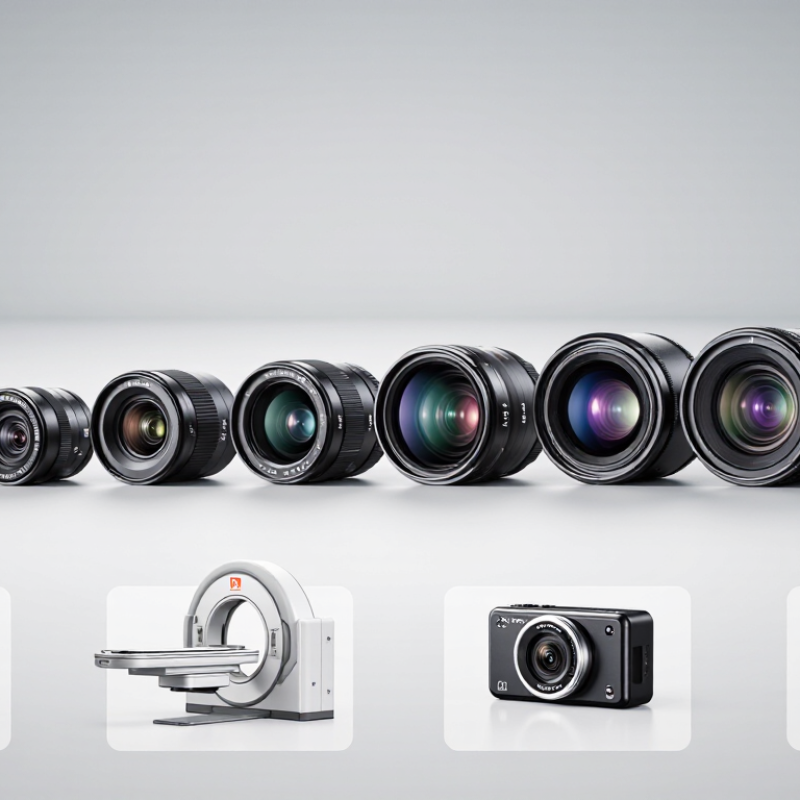
China Top 10 Low Distortion Lens Module Suppliers?

Low-Distortion Lens Modules: Definition, Uses, and Core Specifications

A low-distortion lens module combines optical lenses, a sensor interface, and mechanical alignment. It reduces bending near image edges, where straight lines may appear curved. These modules support machine vision, document scanning, robotics, traffic monitoring, and compact inspection equipment. Clear geometry matters when software measures distance, shape, or position.

Core specifications include distortion percentage, focal length, sensor format, aperture, resolution, and working distance. Modulation transfer function helps assess fine-detail performance. Field of view shows how much of a scene the module captures. Mounting tolerance also matters, because small alignment errors can weaken optical accuracy. A reliable supplier should provide measured data, sample testing, and traceable quality procedures. A specification sheet rarely tells the whole story. Perfect correction is rarely practical.

Tips: Request raw test images, not only charts. Check performance across the full temperature range. Confirm whether distortion data applies before or after software correction. Test reflective surfaces and low-light scenes. Also inspect edge sharpness. Many modules look impressive at the center but lose detail near the corners. For demanding applications, compare several samples from the same production batch. This step costs time, yet it can reveal unstable assembly or inconsistent calibration.

Evaluation Metrics: TV Distortion ≤1%, MTF50, Resolution, and FOV

Selecting China’s top ten low-distortion lens module suppliers requires more than comparing catalog claims. An experienced buyer should inspect TV distortion at the intended image height, not only at the center. Use a calibrated chart and controlled lighting. TV distortion should remain at or below 1% across the usable frame. Record barrel and pincushion behavior separately. MTF50 reveals contrast retention at a defined spatial frequency. A module with sharp center detail may still lose clarity near the corners.

Resolution testing should use printed charts and real scene targets. Check fine text, diagonal edges, and small mechanical features. FOV must match the final enclosure, sensor size, and working distance. A wider FOV can increase corner distortion and reduce edge detail. Request test data at several focus distances and temperatures. Supplier reports are useful, but lab conditions can hide assembly variation. I have seen a strong sample perform differently after minor alignment changes. That limitation deserves attention.

Tips: Ask for raw images, test charts, MTF50 plots, distortion maps, and FOV measurements. Confirm the sensor format and image circle before comparing modules. Repeat tests with three samples, not one. Keep the lighting fixed. Small setup errors can change results. A clear report should state the chart distance, aperture, focus position, and software method. If these details are missing, the numbers may look precise but remain difficult to trust.

China Top 10 Low Distortion Lens Module Suppliers — Evaluation Metrics: TV Distortion ≤1%, MTF50, Resolution, and FOV

Rank Anonymized Supplier Typical Module Application TV Distortion
(% Max.)
MTF50 Center
(lp/mm)
MTF50 Corner
(lp/mm)
Effective Resolution Horizontal FOV Focal Length Sensor Compatibility Evaluation Score
1 Supplier 01 Industrial inspection module 0.35% 92 68 8 MP 92° 3.2 mm 1/1.8 in. 94.2
2 Supplier 02 Machine-vision camera module 0.48% 88 64 12 MP 78° 4.5 mm 1/1.7 in. 92.8
3 Supplier 03 Robotics navigation module 0.62% 84 59 8 MP 100° 2.8 mm 1/2.8 in. 91.6
4 Supplier 04 Automotive surround-view module 0.71% 79 55 5 MP 130° 1.9 mm 1/2.7 in. 90.3
5 Supplier 05 Security monitoring module 0.76% 76 52 8 MP 110° 2.5 mm 1/2.8 in. 89.7
6 Supplier 06 Document-scanning module 0.82% 73 50 13 MP 72° 5.0 mm 1/1.8 in. 88.5
7 Supplier 07 Medical imaging module 0.88% 71 48 5 MP 85° 3.6 mm 1/2.5 in. 87.9
8 Supplier 08 Smart-appliance camera module 0.91% 68 45 4 MP 105° 2.3 mm 1/3 in. 86.8
9 Supplier 09 Barcode and logistics module 0.95% 65 42 5 MP 68° 4.0 mm 1/2.9 in. 85.6
10 Supplier 10 Consumer vision module 0.99% 62 39 8 MP 120° 2.0 mm 1/3.2 in. 84.9
Measurement note: TV distortion values are maximum absolute percentages. MTF50 values are expressed in line pairs per millimeter and should be compared only under the same sensor format, aperture, wavelength, focus distance, and test chart conditions. Final supplier selection should be confirmed through sample testing and a signed optical specification.

China’s Top 10 Suppliers: Products, Markets, and Manufacturing Scale

China’s Top 10 Low-Distortion Lens Module Suppliers: Products, Markets, and Manufacturing Scale

China’s leading ten suppliers serve camera, machine vision, automotive, medical, and security markets. Their products include fixed-focus lenses, wide-angle modules, zoom assemblies, and customized optical systems. Many facilities combine lens molding, precision machining, coating, assembly, and electronic testing under one roof. This reduces transfer delays between production stages.

Manufacturing scale varies considerably. Larger suppliers may operate multiple cleanrooms, automated alignment lines, and several calibration stations. Smaller specialists often provide faster engineering changes and tighter attention to unusual designs. Production volumes can range from prototype batches to millions of modules annually. However, public capacity figures are not always comparable. Some reports count optical parts, while others count complete modules.

From practical evaluation, distortion control depends on more than lens geometry. Suppliers must manage centering, barrel tolerances, sensor matching, and temperature changes. A module can pass laboratory testing yet perform poorly inside a moving vehicle or compact inspection device. Reliable suppliers therefore use interferometers, MTF testers, distortion charts, and image-based calibration. They also provide sample validation before mass production. That matters.

Export markets include Southeast Asia, Europe, North America, and domestic industrial regions. Buyers usually assess optical performance, delivery stability, traceability, and after-sales engineering support. Certification documents help, but they do not replace physical samples. Even experienced manufacturers may need several design revisions before achieving stable low-distortion imaging. This part is often underestimated.

Verification Data: 4K/8MP Imaging, ISO 9001, Calibration, and Yield

China’s top 10 low distortion lens module suppliers should be compared through verified production evidence, not catalog claims. For 4K or 8MP imaging, request full-resolution test images, edge distortion charts, and center-to-corner sharpness data. A practical review should check focus consistency under different lighting conditions. Small alignment errors can become visible in wide-angle scenes.

ISO 9001 certification shows process control, but it does not prove optical performance by itself. Ask for calibration records linked to traceable instruments, including distortion charts, MTF results, and focus test dates. Yield data also needs context. A reported 98% yield may exclude reworked units or early inspection failures. Sample size matters. Our first supplier comparison used too few samples, and the result looked more confident than it deserved. That mistake changed our audit method.

Tips:Request recent batch data, not only presentation slides. Check whether 4K means usable detail across the frame. Confirm whether 8MP testing uses the final lens module, housing, and image sensor. Review at least three production lots. Also ask how rejected modules are classified and recorded. A supplier with clear corrective-action reports may be more reliable than one showing perfect numbers. Field testing remains necessary, because laboratory calibration cannot reproduce every temperature change, vibration condition, or assembly variation.

Supplier Selection: Price, Lead Time, Customization, and Technical Support

China Top 10 Low Distortion Lens Module Suppliers

Selecting a low distortion lens module supplier requires more than comparing unit prices. Grand View Research estimates the global machine vision market will grow at about 7.6% annually through 2030. This growth increases pressure on suppliers, especially for stable optical performance and predictable delivery. A lower quotation may hide tooling charges, inspection fees, or expensive engineering changes. Request a complete cost sheet, including sample production and replacement terms.

Lead time should be measured with written milestones. Ask when optical design, tooling, pilot samples, and mass production will finish. A practical evaluation includes a 10-piece pilot lot, distortion charts, MTF data, and temperature testing. The supplier should explain whether delivery changes after customization. I would not trust a promise without records.

Customization ability separates capable suppliers from assembly-only vendors. Check support for focal length, sensor format, housing size, coating, and connector changes. According to MarketsandMarkets, the machine vision market was projected to reach approximately 19.7 billion dollars by 2028, increasing demand for application-specific modules. Technical support should include optical simulation, tolerance analysis, calibration guidance, and failure analysis. Fast replies matter, but documented answers matter more. Some suppliers provide impressive samples, yet their production consistency remains uncertain. That weakness deserves a second audit.

FAQS

What products do leading suppliers typically offer?

They offer fixed-focus lenses, wide-angle modules, zoom assemblies, and customized optical systems. Some designs target cameras, vehicles, medical devices, or machine vision equipment. Not every supplier supports every format.

Which markets commonly use low-distortion lens modules?

Common markets include automotive systems, industrial inspection, security equipment, medical imaging, and consumer cameras. Export destinations include Southeast Asia, Europe, North America, and domestic industrial regions. Applications differ greatly.

How large are these suppliers’ manufacturing operations?

Larger facilities may use cleanrooms, automated alignment lines, and multiple calibration stations. Annual output can range from prototypes to millions of modules. Capacity figures are not always comparable. Some companies count parts, not complete modules.

What controls image distortion during production?

Distortion control depends on lens geometry, centering, barrel tolerances, sensor matching, and temperature changes. Suppliers may use interferometers, MTF testers, distortion charts, and image-based calibration. A laboratory result may not predict vehicle performance. That gap matters.

How should buyers evaluate optical performance?

Request physical samples, distortion charts, MTF data, and temperature-testing results. A practical trial may include ten pilot units. Test the modules inside the intended device. Do not trust documents alone.

How can buyers compare prices fairly?

Ask for a complete cost sheet covering tooling, samples, inspection, replacements, and engineering changes. A low unit price may hide later charges. The cheapest quote can become expensive. I would check assumptions twice.

What lead-time information should suppliers provide?

Suppliers should provide written milestones for design, tooling, pilot samples, and mass production. Ask whether customization changes the delivery schedule. Keep approval records and revision dates. Promises without records are weak.

What customization and technical support should buyers expect?

Capable suppliers may adjust focal length, sensor format, housing size, coating, and connectors. Useful support includes optical simulation, tolerance analysis, calibration guidance, and failure analysis. Fast replies help. Documented answers help more. Production consistency still needs a second audit.

Conclusion

This article explores China’s top 10 low-distortion lens module suppliers, focusing on how their products support machine vision, industrial inspection, medical imaging, automotive systems, security equipment, and other high-precision applications. It explains the definition and practical value of low-distortion lens modules, including the role of a Distortion-Free Low-Distortion Lens Module in maintaining accurate image geometry. Key evaluation criteria include TV distortion of 1% or less, MTF50 performance, resolution, field of view, and compatibility with 4K or 8MP imaging systems.

The comparison also considers each supplier’s product range, target markets, manufacturing scale, calibration processes, ISO 9001 quality management, and production yield. For buyers, the article highlights essential selection factors such as pricing, lead time, customization capability, optical and mechanical integration, testing procedures, and technical support. These considerations can help users identify reliable suppliers and choose lens modules that deliver consistent imaging quality, stable production performance, and long-term application value.


Henry

Henry

Henry is a dedicated marketing professional with a profound expertise in the company's offerings. With years of experience in the industry, he possesses an impressive understanding of the market dynamics and consumer behaviors that drive success. Henry is committed to sharing his insights through......