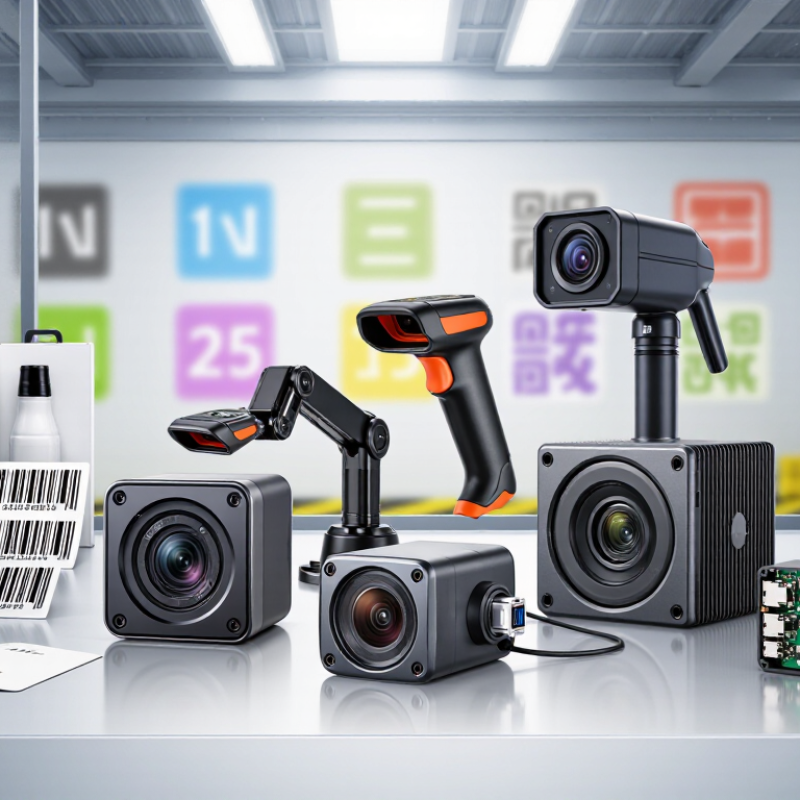
| 1D Laser Scan Engine |
EAN/UPC
Code 128
Code 39
ITF
GS1-128
|
Retail checkout, inventory terminals, access-control readers, warehouse handheld devices, and legacy point-of-sale equipment. |
Usually near-field to medium-distance scanning; the actual distance depends on symbol width, print quality, optical design, and laser power. |
Performs well with high-contrast linear symbols and can tolerate moderate movement. It generally cannot read matrix codes or poorly printed omnidirectional symbols. |
Requires optical alignment, a laser safety design, scan-window control, trigger logic, decoder firmware, and a host interface such as UART, USB, or RS-232. |
Consider IEC 60825-1 laser classification, applicable electrical safety rules, electromagnetic compatibility requirements, and regional radio requirements if wireless electronics are included. |
Fast linear scanning, mature decoding technology, narrow optical form factor, and relatively simple data processing. |
Limited to primarily one-dimensional codes; laser optics may be less suitable for reflective, damaged, curved, or low-contrast labels. |
Buyers serving legacy 1D retail or logistics applications where low cost and rapid linear scanning are more important than 2D capability. |
| 1D Linear Imager |
EAN/UPC
Code 128
Code 39
Codabar
GS1 DataBar
|
Handheld scanners, ticketing, parcel sorting, document tracking, and compact embedded devices. |
Short to medium range, normally determined by sensor resolution, focal length, illumination, and the minimum element width of the barcode. |
No moving laser parts; suitable for moderate motion and curved labels. Requires adequate illumination and focus across the intended working distance. |
Needs a CMOS or similar linear sensor, lens, LED illumination, decoder software, trigger input, thermal management, and a mechanical window with controlled reflections. |
Evaluate IEC 62471 or equivalent photobiological safety considerations for LED illumination, EMC, electrical safety, and environmental requirements for the destination market. |
Lower mechanical complexity than laser engines, good reliability, compact construction, and efficient integration into handheld equipment. |
Cannot natively capture two-dimensional symbols; performance decreases when bars are heavily distorted, blurred, or poorly illuminated. |
Manufacturers needing a compact and economical 1D engine for equipment with controlled scanning distance. |
| 2D Area-Imaging Camera Module |
QR Code
Data Matrix
PDF417
Aztec
EAN/UPC
GS1 DataMatrix
|
Mobile payment, product authentication, healthcare identification, parcel handling, ticket validation, and general-purpose industrial scanning. |
Short, medium, or extended range depending on sensor size, lens field of view, symbol density, lighting, and decoding configuration. |
Supports omnidirectional reading and can handle screen-based codes, but motion blur, glare, low light, and out-of-focus images may reduce performance. |
Requires an image sensor, lens, illumination, decoder library, image-processing resources, window design, trigger or presentation mode, and a suitable host protocol. |
Commonly assessed against ISO/IEC 18004 for QR Code, ISO/IEC 16022 for Data Matrix, ISO/IEC 15438 for PDF417, and applicable GS1 specifications. |
Broadest symbology coverage, strong tolerance for orientation changes, and compatibility with both printed and electronic codes. |
Usually higher power and processing demand than 1D engines; lens quality, lighting geometry, and image tuning strongly affect results. |
Global buyers requiring one module for mixed 1D and 2D applications or future product upgrades. |
| Fixed-Mount 2D Scan Camera |
1D and 2D codes
GS1 formats
Direct-part-mark codes
|
Conveyor tracking, automated packaging, sortation, production-line traceability, and kiosk scanning. |
Medium to long working distances are possible when the lens, sensor resolution, and illumination are correctly matched to the application. |
Designed for continuous or triggered operation. Performance depends on exposure time, frame rate, conveyor speed, lighting uniformity, and vibration control. |
Requires rigid mounting, calibrated field of view, external or integrated lighting, PLC or industrial controller communication, I/O timing, and enclosure protection where needed. |
Review ISO/IEC symbology standards, ISO 15415 or ISO 15416 verification practices where grading is required, machine safety, EMC, and ingress-protection expectations. |
Suitable for automation, high throughput, controlled geometry, and integration with inspection or traceability systems. |
Higher installation and commissioning effort; incorrect camera angle, glare, or conveyor timing can cause inconsistent reads. |
Factories, distribution centers, and system integrators purchasing modules for automated equipment rather than handheld products. |
| Global-Shutter Industrial Camera Module |
1D and 2D codes
Small symbols
Fast-moving targets
|
High-speed manufacturing, robotic handling, electronics traceability, pharmaceutical packaging, and fast parcel transport. |
Application-specific; range is determined by lens selection, pixel size, required pixels per module, and the physical target area. |
Global shutter captures the image at substantially the same time across the sensor, reducing rolling-shutter distortion on moving objects. It still requires adequate exposure and lighting. |
Needs a compatible processor, high-speed data path, synchronized trigger, precise lens and lighting selection, heat dissipation, and software support for exposure and gain control. |
Evaluate machine-vision safety, EMC, electrical safety, environmental durability, and the applicable ISO/IEC code-printing and quality-verification standards. |
Strong choice for rapid motion, robotic applications, and applications where geometric distortion must be minimized. |
Often costs more and may require more processing bandwidth, storage, and engineering effort than basic rolling-shutter designs. |
Industrial buyers whose throughput, timing accuracy, and image consistency justify a higher-performance architecture. |
| Rolling-Shutter CMOS Camera Module |
QR Code
Data Matrix
PDF417
EAN/UPC
|
Stationary or slow-moving scanning, smart lockers, kiosks, access control, office devices, and consumer-facing equipment. |
Short to medium range, commonly optimized through fixed focus or a selected depth-of-field range. |
Generally performs well when the target is stationary or moves slowly. Fast lateral motion may produce geometric distortion or decode failures. |
Requires image capture timing, suitable illumination, lens and window design, decoder software, and host-side image or data processing. |
Review applicable camera-module EMC and electrical requirements, optical-safety considerations, and ISO/IEC standards for the supported symbologies. |
Can provide a cost-efficient 2D solution with low component count and widely available image-processing support. |
Less suitable for high-speed moving targets; exposure, vibration, and illumination must be carefully controlled. |
Equipment designers with predictable scanning geometry and a strong focus on cost, size, and power consumption. |
| Near-Infrared-Assisted Camera Module |
1D and 2D codes
Low-contrast labels
Dark environments
|
Warehouses, dark retail fixtures, enclosed kiosks, night logistics, and devices that need consistent illumination in changing ambient light. |
Short to medium range in most compact designs; the effective range depends on sensor sensitivity, lens transmission, and illumination intensity. |
Improves consistency in low ambient light and can reduce dependence on visible-light conditions. It does not eliminate blur, glare, or focus limitations. |
Requires wavelength-compatible optics, controlled LED output, thermal design, optical isolation, and software settings for exposure and illumination timing. |
Assess IEC 62471 or equivalent photobiological safety, EMC, electrical safety, and regional product requirements for the complete device. |
More stable performance in darkness or variable ambient lighting and better control over the capture environment. |
May not perform well with codes or screens that have poor near-infrared response; additional heat and power may be generated. |
Buyers whose products must scan reliably in enclosed, dim, or highly variable lighting conditions. |
| High-Resolution Direct-Part-Mark Camera Module |
Data Matrix ECC 200
Micro QR
Fine 1D codes
|
Automotive parts, electronics, medical devices, tools, metal components, and permanent product traceability. |
Usually short to medium range because small modules and low-contrast marks require high optical resolution and controlled focus. |
Needs stable positioning, sufficient contrast, carefully selected lighting, and often multiple lighting angles for etched, dot-peened, laser-marked, or reflective surfaces. |
Requires high-resolution optics, rigid mounting, glare control, advanced decoding, calibrated illumination, and sometimes image-quality verification software. |
Consider ISO/IEC 16022 for Data Matrix, ISO/IEC 29158 for direct-part-mark quality guidance, ISO/IEC 15415 for 2D print quality where applicable, EMC, and machine-safety requirements. |
Supports permanent identification and difficult marks that ordinary retail-oriented modules may not decode reliably. |
Higher optical and lighting cost; performance is highly dependent on mark quality, surface finish, angle, and calibration. |
Industrial and healthcare manufacturers with strict traceability, serialization, or permanent-marking requirements. |
| Long-Range 2D Camera Module |
Large QR Code
Code 128
PDF417
Warehouse labels
|
High-bay warehouses, vehicle identification, pallet handling, large containers, loading docks, and scanning from a protected distance. |
Medium to long range, depending on focal length, sensor resolution, symbol size, working distance, and environmental lighting. |
May support presentation or triggered scanning at distance. Vibration, atmospheric conditions, low contrast, and insufficient pixels on the code can reduce reliability. |
Requires a suitable telephoto or narrow-field lens, accurate focus, strong illumination, mounting stability, trigger control, and a high-bandwidth interface where image transfer is used. |
Review applicable ISO/IEC symbology standards, industrial EMC, environmental protection, electrical safety, and regional requirements for the complete installation. |
Reduces the need for operators or robots to approach the code and can improve safety and workflow efficiency. |
Larger optical assemblies, narrower field of view, greater installation sensitivity, and potentially higher cost. |
Logistics and automation buyers with fixed scan stations, large labels, or restricted access to the target. |
| Compact Board-Level Embedded Scanner |
1D and 2D codes
QR Code
Data Matrix
EAN/UPC
|
Self-service terminals, smart cabinets, payment equipment, access readers, laboratory instruments, and compact industrial controls. |
Typically short range with a defined field of view; fixed-focus versions are common for controlled scanning distances. |
Best for stationary presentation scanning. Performance depends on enclosure design, ambient light rejection, window cleanliness, and thermal conditions. |
Requires a host processor or decoder board, mechanical brackets, a protective optical window, cable definition, firmware integration, and validation of power-up behavior. |
Compliance normally applies to the finished equipment, including EMC, electrical safety, radio requirements if applicable, RoHS or similar substance restrictions, and optical-safety considerations. |
Small footprint, flexible mechanical integration, and suitability for custom equipment with limited enclosure space. |
More responsibility remains with the equipment maker for firmware, thermal management, shielding, testing, and field serviceability. |
OEMs and engineering teams that need a deeply integrated scanner rather than a complete handheld or presentation device. |
| Smart Camera Module with Onboard Decoding |
1D and 2D codes
GS1 Digital Link
Multiple formats
|
Connected kiosks, industrial gateways, smart inventory equipment, automated inspection nodes, and edge-processing systems. |
Short to long range depending on sensor and lens configuration; decoding capability is separate from optical range. |
Can apply exposure control, image enhancement, and decoding locally. Real performance depends on processor capacity, algorithm configuration, and thermal stability. |
Requires software integration, firmware lifecycle management, update security, interface documentation, memory allocation, and protection of stored configuration or data. |
Assess the complete product against EMC, electrical safety, cybersecurity, privacy, radio, and applicable barcode-quality standards; compliance is usually not established by the module alone. |
Reduces host-processing demand, supports local decisions, and can lower data transmission volume. |
Higher software dependency, more complex updates, and the need to confirm long-term firmware support and cybersecurity processes. |
Buyers building connected equipment that requires local decoding, event handling, diagnostics, or network integration. |
| Ruggedized Sealed Camera Module |
1D and 2D codes
Outdoor labels
Industrial marks
|
Cold-chain logistics, outdoor kiosks, food and beverage lines, chemical facilities, transport equipment, and dusty production environments. |
Application-specific; sealing, protective windows, and environmental materials may influence optical performance and working distance. |
Designed for dust, moisture, vibration, or temperature variation when the complete assembly is properly engineered and tested. |
Requires sealed housing or interface design, compatible gaskets, condensation control, corrosion-resistant materials, vibration testing, and a service strategy for the optical window. |
Review the target IP rating under IEC 60529, environmental and vibration requirements, EMC, electrical safety, material restrictions, and any sector-specific hygiene rules. |
Better reliability in harsh environments and lower risk of contamination or moisture-related failure. |
Higher mechanical cost, more demanding thermal design, and possible reduction in optical flexibility due to protective windows. |
Global buyers needing reliable scanning outside clean indoor office or retail conditions. |
| Multi-Camera or Multi-Focus Scanning Module |
Mixed code sizes
1D and 2D codes
Multiple orientations
|
Parcel dimensioning, tunnel scanning, automated sortation, multi-face package reading, and applications with unpredictable code position. |
Can cover multiple working distances or viewing angles; the effective range varies by camera, lens, and system geometry. |
Improves coverage and reduces blind spots. Synchronization, exposure timing, motion blur, and image-selection logic remain important. |
Requires multiple sensors or optical channels, synchronized triggering, higher processing capacity, mechanical calibration, data fusion, and increased power and cable planning. |
Evaluate the complete system for EMC, electrical safety, machine safety, applicable ISO/IEC symbology standards, and environmental requirements. |
High coverage, better tolerance of package orientation, and strong suitability for complex automated workflows. |
More expensive and complex to install, calibrate, maintain, and troubleshoot than a single-camera solution. |
Large logistics and automation projects where read-rate improvement and coverage justify system complexity. |